Always On, Always Alone: The Quiet Burnout Spreading Through the Creator World

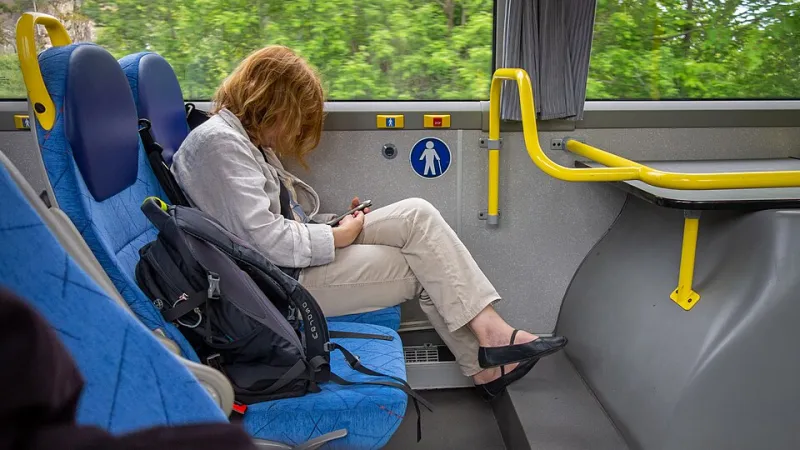
Photo: izhora22, CC0, via Wikimedia Commons
Jordan posts every day. Has for two and a half years. Their comment section is full of people who know their coffee order, their cat's name, the name of the ex they never technically confirmed but everyone figured out anyway. Fans send birthday messages. They send memes that are specifically tailored to inside jokes that live only in Jordan's comment section.
By any external measure, Jordan is surrounded by community.
"I've never felt more alone in my life," they said, quietly, about twenty minutes into our conversation.
This is the part of the creator economy that doesn't show up in the funding announcements or the "how I make six figures from my phone" thumbnails. It's the part that's been building quietly for years and is now, by many accounts, reaching something close to a breaking point.
The Intimacy Illusion
User-generated content platforms were built on a promise of connection — real people, real moments, real relationships between creators and the people who watch them. And in many ways, that promise delivered. The parasocial bond between a creator and their audience can feel genuinely warm, genuinely reciprocal, genuinely meaningful.
But there's an asymmetry baked into that relationship that never fully resolves. The audience knows the creator. The creator, at scale, cannot possibly know the audience back. And somewhere in that gap, something quietly breaks.
Alex, a mid-tier lifestyle creator with around 180,000 followers across platforms, described it this way: "My audience feels like they're my friends. And I love them — I genuinely do. But I'm performing friendship for hundreds of thousands of people at once, and I go home to an empty apartment. There's no one to just be with. Everyone I know either watches my content or works in the industry. The line between my job and my life completely dissolved."
That dissolution — of boundaries, of private self, of off-hours — is one of the most consistent themes in conversations with creators who've hit a wall.
The Algorithm Doesn't Care If You're Okay
Platform incentive structures are a significant part of the problem, and most creators will tell you so directly.
Algorithms that reward posting frequency, consistency, and engagement velocity don't have a setting for "this person needs two weeks off." Taking a break from posting doesn't just mean fewer views — it can mean the algorithm essentially deprioritizes your content for weeks after you return, punishing the absence in ways that feel deeply unfair to creators who've spent years building their presence.
For emerging and mid-tier creators especially — the ones who haven't yet reached the income level where they can hire managers or editors or take real time off — this creates a trap. The moment you need rest the most is the moment you can least afford, economically or algorithmically, to actually take it.
Samantha, who built a following of around 85,000 on the back of candid, emotionally honest videos about her life in her late 20s, described the pressure as "a treadmill that speeds up every time you almost catch your breath."
"I started making videos because I wanted to connect with people who got it," she said. "And I found that. But then the pressure to keep finding it, keep performing it, keep delivering it on a schedule — it stopped feeling like connection and started feeling like a second job I couldn't quit because I'd already told everyone it was my whole personality."
She took a six-week break last spring. She lost roughly 12% of her following. She said it was worth it, but she also said she cried about the numbers more than she expected to.
When the Community Becomes the Cage
There's a specific kind of creator burnout that doesn't get talked about enough: the burnout that comes not from making content, but from managing the emotional labor of the audience.
Comment sections, DMs, community tabs, live streams — the modern creator is expected to be available across multiple channels, responding to fans, moderating conflict, absorbing criticism, and performing gratitude for support, often simultaneously. For creators whose content is personal or emotionally vulnerable, the weight of that labor is compounded.
Marcus, who makes videos about mental health and anxiety from his apartment in Atlanta, told us that the irony of his situation isn't lost on him.
"I make content about taking care of your mental health. I have people in my DMs every day telling me my videos helped them through something hard. And I'm sitting there, completely overwhelmed, not sleeping, not going outside, just producing and responding and producing and responding. I became the resource I was telling other people to find."
He's since implemented strict boundaries — no DMs, comments open only on select videos, one post per week maximum. His growth slowed. He says he's sleeping again.
Finding the Off-Ramp (Or at Least the Rest Stop)
Creators who've navigated burnout and come out the other side tend to share a few common strategies, though none of them are easy and all of them involve accepting some version of loss.
Redefining what success looks like. Several creators described a deliberate shift away from tracking follower counts and toward tracking how they feel about the work itself. "I stopped checking my analytics daily," one creator told us. "Weekly at most. It sounds small but it genuinely changed my relationship with posting."
Creating content in batches, not in real time. Filming and editing multiple pieces at once and scheduling them removes the daily pressure to perform, even on days when life is hard. It also creates a buffer between the creator's real emotional state and what the audience sees.
Being honest with the audience about limitations. This one is counterintuitive — it feels risky to tell your community that you can't respond to every DM or that you're stepping back. But creators who've done it report that their audiences respond with more warmth than expected. Honesty, it turns out, is still the best content strategy.
Finding community outside the work. This is the hardest one, especially for creators whose social lives have been absorbed by the industry. But multiple creators cited reconnecting with friends who don't watch their content, or picking up offline hobbies, as the single most stabilizing thing they did.
The Bigger Picture
The creator economy is still young enough that we're only beginning to understand its long-term human cost. Platforms are slowly — very slowly — adding features that acknowledge creator wellbeing: quiet modes, comment filters, built-in break reminders. But structural change at the algorithmic level, the kind that would genuinely stop punishing creators for taking time off, remains largely absent.
What's clear is that the most sustainable creators aren't the ones who post the most. They're the ones who figured out, often the hard way, that the audience they're building can't replace the life they need to have outside of it.
Jordan is still posting. Less often now. The comments still come, still warm, still full of people who feel like they know them.
"I'm learning to let that be enough," Jordan said. "Without letting it be everything."