Messy Wins: The Surprising Reason Raw Phone Videos Keep Beating Studio-Quality Content
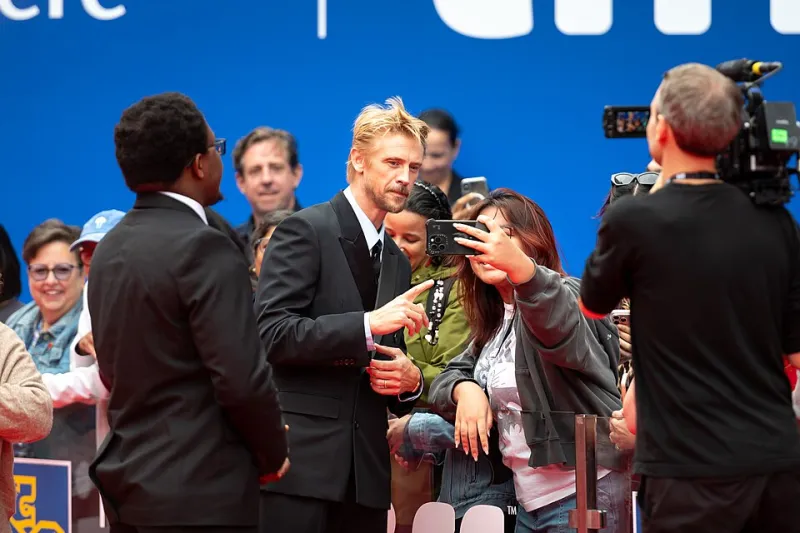
Photo: K6ka, CC BY-SA 4.0, via Wikimedia Commons
Somewhere in Los Angeles, a creator spent three days shooting a beautifully lit, color-graded video essay about coffee culture. It pulled in about 4,000 views. Meanwhile, a guy in Ohio pointed his phone at his face in a Panera parking lot, said "okay so this is actually wild," and racked up 2.3 million. Same topic. Completely different outcome.
If you've spent any time watching — or making — videos online, you've probably noticed this pattern. The slicker the production, sometimes the quieter the room. And if you're a creator who's invested in gear, lighting, or editing software, that can feel genuinely demoralizing. But here's the thing: it's not random. There's a real reason this keeps happening, and once you understand it, it changes how you think about hitting record.
The Authenticity Tax
When a video looks too good, something subtle shifts in how viewers receive it. The brain starts categorizing it differently — less like a conversation, more like an ad. That mental shift creates distance. You're no longer watching someone, you're watching content. And in an era where people are more skeptical of marketing than ever, that distinction matters enormously.
Researchers who study media consumption have a term for this: the authenticity tax. Polished production signals effort, yes — but it also signals intent. And intent, in the mind of a casual scroller, can read as manipulation. Raw footage doesn't carry that same baggage. A shaky camera, a dog barking in the background, someone accidentally cutting themselves off mid-sentence — these aren't flaws. They're proof that nobody was trying to sell you anything.
Creator Destiny M., who posts lifestyle and mental health content and has built a following of over 800,000 across platforms, put it plainly in a recent conversation: "The videos I spent the least time on almost always do better. It used to frustrate me. Now I just lean into it. If I'm genuinely in a feeling and I grab my phone, people feel that. If I spend two hours setting up a shot, they feel that too — but not in a good way."
What the Data Actually Shows
This isn't just anecdote. Engagement metrics across major video platforms consistently tell the same story. In multiple platform transparency reports and third-party analytics studies, vertical phone-shot video — particularly content under 90 seconds with minimal editing — outperforms produced content on nearly every interaction metric: shares, comments, saves, and replays.
The algorithm doesn't know what looks expensive. It knows what people watch to the end, what they rewatch, and what they send to a friend. And those behaviors cluster heavily around content that feels spontaneous, even when it isn't entirely.
That last part is worth pausing on. Some of the most "authentic" feeling videos online are actually carefully constructed to appear off-the-cuff. The slightly crooked frame. The unscripted-sounding stumble. The "I wasn't even going to post this" opener. Creators have gotten smart about engineering the aesthetic of rawness without sacrificing message clarity. It's a genuinely interesting creative challenge — and a legitimate skill.
When Polish Actually Works Against You
There are contexts where high production still earns its keep. Long-form documentary content, tutorials where visual clarity matters, branded partnerships where a certain aesthetic is part of the deal — these formats benefit from craft. Nobody wants a shaky, dimly lit cooking video where they can't see whether the onions are translucent yet.
But for opinion content, personal storytelling, reaction videos, commentary, and anything emotionally driven? The phone-in-hand approach often just lands harder. The medium reinforces the message. "I'm talking to you right now, not performing for you."
Jordan T., a sports commentary creator based in Atlanta who grew his channel from zero to 120,000 subscribers in under a year, describes his process this way: "I used to wait until I had a good setup. Good lighting, quiet room, script ready. But I'd lose the heat of the moment. Now if something happens in a game and I have a take, I'm recording in whatever room I'm in. That immediacy — people respond to it. They can feel that I actually care."
The Practical Takeaway for Creators
None of this means you should stop caring about quality entirely. Terrible audio is still terrible audio — bad sound kills retention faster than almost anything else, and a decent clip-on mic costs less than dinner for two. Similarly, if your framing makes the video hard to follow, that's worth fixing.
But there's a useful mental reset here. Ask yourself before every video: Is the setup serving the content, or am I using the setup as a reason to delay posting? A lot of creator paralysis lives in that gap between "ready to film" and "ready to be seen." The phone in your pocket collapses that gap.
Some of the most-watched, most-shared moments on Ondube and platforms like it started with someone just... talking. No script. No backdrop. No plan. Just something they needed to say and a camera that was already there.
The algorithm didn't build a preference for raw content out of nowhere. It built that preference because people have that preference. And people have it because connection — real, messy, imperfect connection — is what they came for in the first place.
So yeah. Film in your car. Film in your kitchen at midnight. Film with the fan still running and the notification sound you forgot to turn off. The vibe you're trying to create doesn't live in your production budget. It lives in whether you actually meant what you said.
And your phone already knows how to capture that.