Nobody Asked for the Fame: How Regular People Are Quietly Stealing the Spotlight from Pro Creators
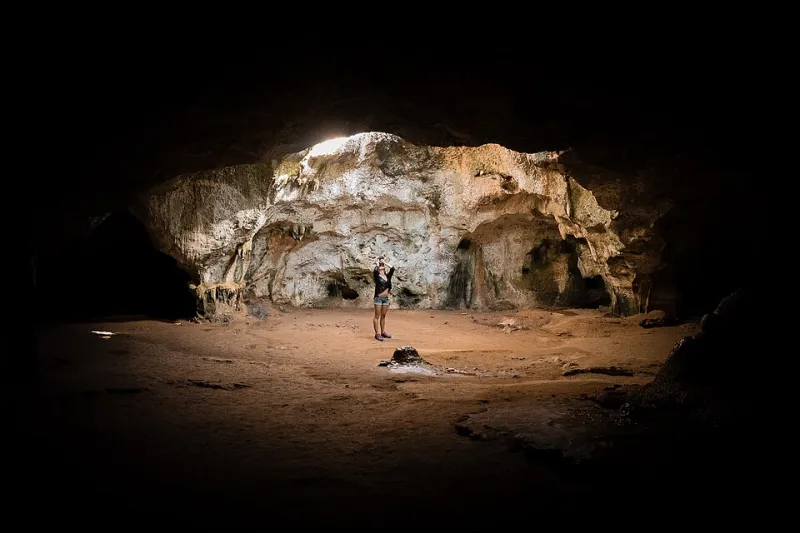
Photo: Lesly B. Juarez jblesly, CC0, via Wikimedia Commons
There's a particular kind of video that keeps showing up in everyone's feeds lately. It's shot vertically, probably indoors, with whatever lighting the room already had. The person on screen isn't wearing a ring light glow or a carefully chosen neutral-toned background. They're just... talking. Maybe they're standing in their kitchen. Maybe they're still in their car after work. And somehow, inexplicably, millions of people watched it.
Welcome to the era of the accidental influencer — the person who never once typed the words "content strategy" into a search bar but somehow ended up with a bigger, more engaged audience than creators who've been grinding for years.
The Unplanned Upload That Changed Everything
It usually starts the same way. Someone posts a video because they felt like it — a rant about something annoying, a funny moment with their dog, a weirdly specific cooking tip nobody else was talking about. They don't optimize the caption. They don't post at peak engagement hours. They definitely don't add a call to action at the end.
And then the views start climbing.
This isn't a once-in-a-while story anymore. Across platforms, the pattern keeps repeating: the unpolished, unsponsored, unplanned upload outperforms content that took a full production day to make. The question worth asking isn't whether this is happening — it clearly is — but why audiences keep choosing the rough cut over the refined one.
Polish Has a Price Nobody Talks About
Here's the thing about professional creator content: it's good. Genuinely good, often. The lighting is clean, the edits are tight, the pacing is dialed in. But somewhere in the process of getting that good, something else quietly exits the frame — the sense that a real person is actually on the other side of the screen.
Audiences are perceptive in ways that even they can't always articulate. They can feel the invisible hand of a brand deal shaping what a creator says. They can sense the performance underneath a "casual" vlog. After years of consuming content, viewers have developed a kind of fluency for authenticity — and they can clock inauthenticity almost instantly, even if they can't name it.
The accidental influencer has none of those tells. There's no sponsorship softening their opinion. No editor smoothing out their awkward pause. No PR strategy deciding which parts of their life are shareable. What you get is just the person — unmediated, unfiltered, and weirdly refreshing because of it.
The Parasocial Math Nobody Expected
Parasocial connections — the one-sided bonds viewers form with people on screen — have always been the backbone of creator culture. But there's a growing body of evidence, both anecdotal and in platform engagement data, suggesting that these bonds form faster and stronger with everyday creators than with polished ones.
The logic makes sense once you sit with it. When someone shares a video about struggling to pay rent, or being the only one in their friend group who didn't get invited somewhere, or crying in their car before walking into work — viewers don't just watch. They recognize it. That recognition is more powerful than admiration. You can admire someone from a distance. Recognition pulls you in close.
Professional creators often build audiences through aspiration. Accidental influencers build them through identification. And identification, it turns out, creates stickier communities.
The Algorithm's Underdog Bias (Sort Of)
It would be easy to frame this as the algorithm finally getting it right — rewarding realness over production value. The truth is messier than that. Recommendation systems don't actually care about authenticity; they care about engagement signals. Watch time, shares, saves, comments. But here's where the accidental influencer gets an unexpected edge: genuine reactions generate genuine engagement.
When a video hits because it's real, people don't just double-tap and scroll. They send it to their sister. They quote it in a group chat. They save it to show someone later. That behavior pattern looks extremely good to an algorithm, regardless of whether the video cost $0 or $5,000 to make.
So the algorithm isn't championing authenticity as a value — it's just following the engagement. But the result is the same: the person who posted from their bathroom with no plan is suddenly getting pushed to hundreds of thousands of feeds.
What This Means for Creators Who Actually Put in the Work
This isn't a clean villain story. The rise of the accidental influencer doesn't mean professional creators are finished — far from it. But it does force a real reckoning with what "making it" is supposed to look like.
For years, the playbook was clear: grow your audience, refine your brand, land brand deals, build a business. A lot of creators followed that path faithfully and built genuinely sustainable careers. But the goalposts have shifted in a way that's hard to ignore. Audiences aren't just looking for good content anymore. They're looking for true content.
The creators navigating this well aren't abandoning their craft — they're loosening their grip on it. They're letting the awkward take stay in. They're posting the unfinished thought. They're talking about the hard week instead of pretending the camera only turns on when life is good.
The New Definition of Making It
Maybe the most interesting thing about the accidental influencer phenomenon is what it reveals about what viewers actually want from video content in 2024 and beyond. It's not entertainment in the traditional sense — not a performance, not a show. It's more like company. It's the feeling that someone out there is living a life that looks a little bit like yours, and they're talking about it out loud so you don't have to feel so alone in it.
That's not something you can manufacture. You can approximate it, and plenty of creators have gotten very good at approximating it. But the real thing — the video someone posted because they just needed to say it — hits different every single time.
On a platform built around the idea of vibing together, that might be the most powerful thing a video can do. Not impress you. Not inform you. Just make you feel like someone gets it.
And sometimes, that's all it takes to blow up.