Your Feed Is Yours Alone: How Algorithms Are Quietly Pulling Friends Apart
Picture this: you spend twenty minutes dying laughing at a video of some guy in Ohio attempting to deep-fry a birthday cake. It's chaotic, it's oddly wholesome, and you immediately want to share it with your best friend. You text them the link. They watch it, smile politely, and say "lol that's funny" — but there's a flatness to it. The magic doesn't translate. They weren't there for the journey.
That gap you just felt? It's not about humor compatibility. It's the algorithm.
How Two People on the Same App Live in Completely Different Worlds
Streaming and short-form video platforms have spent years perfecting the art of personalization. Every pause, every replay, every skip — it all feeds a system designed to keep you specifically locked in. And it works. It works so well that two people sitting in the same room, using the same app, can be served content so different it might as well be two separate platforms.
Your feed reflects your watch history, your engagement patterns, the time of day you scroll, even how long you linger on a thumbnail before moving on. Your best friend's feed reflects theirs. The longer you've each been on the platform, the more those feeds diverge. Over time, you're not just watching different videos — you're essentially living in different content universes.
This isn't a bug. It's the whole point. Platforms don't get rewarded for giving you and your roommate the same experience. They get rewarded for keeping each of you hooked individually. And that changes things in ways we're only starting to notice.
The Shared Reference Problem
There's a reason inside jokes used to travel fast. When everyone watched the same three TV channels, the same Saturday morning cartoons, or even the same viral YouTube video that somehow hit every corner of the internet at once — you had shared references. You could walk into school or work Monday morning and already have a conversation starter baked in.
That shared cultural shorthand is getting harder to come by. Sure, mega-viral moments still happen — the occasional audio clip or meme format that saturates every corner of the internet simultaneously. But those moments are increasingly rare, and the space between them is filled with hyper-personalized content that nobody else in your life is seeing.
When your feed is full of niche woodworking tutorials, obscure true crime commentary, and a very specific subculture of competitive dog grooming, and your best friend's feed is deep in cooking fails, local sports highlights, and lo-fi study streams — you've got less to talk about than you think. The shared viewing experience, which used to be one of the easiest ways to bond, is quietly disappearing.
Friendship Used to Mean Watching the Same Things
This might sound dramatic, but think about how much of your closest friendships are built on mutual media consumption. You bonded over a show. You quoted the same movie for years. You both discovered the same creator at the same time and rode that wave together. Shared content has always been social glue.
Now imagine that glue slowly losing its stick.
It's not that people are watching less — if anything, people are watching more than ever. It's that the watching has become deeply private. Your viewing life is increasingly a solo experience, curated specifically for you, in a way that makes it genuinely hard to invite someone else in. You can share a video, sure, but you can't share the context that made it land. You can't share the twenty other videos that led you there. The algorithm built a room for one, and there's no plus-one option.
The Weird Loneliness of Hyper-Connected Isolation
Here's the irony that stings a little: we are more connected to content creators, online communities, and parasocial relationships than any generation before us. We feel like we know people we've never met. We have inside jokes with strangers in comment sections. We feel genuinely seen by a creator who has no idea we exist.
And yet, the people sitting next to us — the actual friends, the real relationships — are drifting into their own separate content bubbles. You can be deeply plugged in and still feel like nobody in your physical life gets what you're watching or why it matters to you.
Some researchers have started calling this "algorithmic loneliness" — not the absence of connection, but the fragmentation of it. You're connected everywhere and nowhere at the same time.
Are Platforms Making This Worse on Purpose?
Not exactly on purpose — but not entirely by accident either. The metrics that platforms optimize for (watch time, return visits, engagement) are all individual metrics. There's no reward for making sure two friends have overlapping feeds. There's no KPI for "shared viewing moments."
Some platforms have experimented with social features — co-watching tools, shared playlists, friend activity feeds — but these features rarely get the same development energy as the core recommendation engine. They're add-ons. The algorithm is the main character.
Until platforms start measuring connection between users — not just engagement from individual users — the fragmentation is probably going to keep deepening.
Can You Fight It?
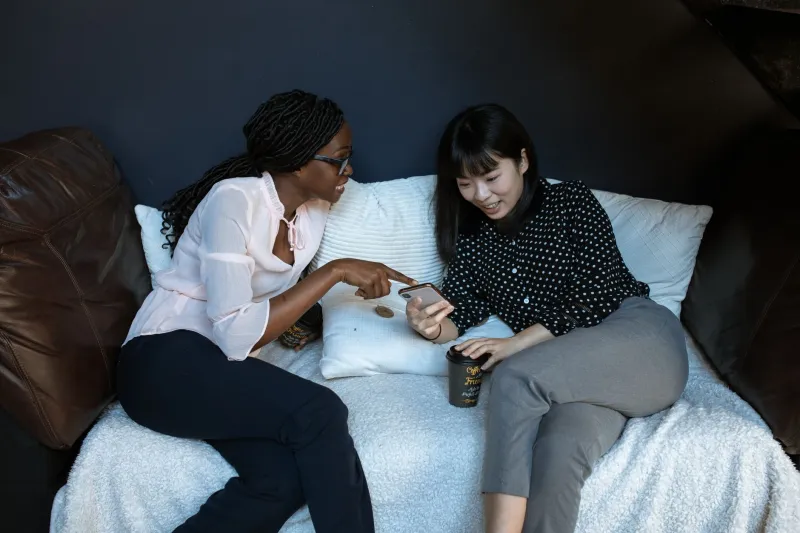
A little. Some people are actively pushing back by making shared viewing a deliberate act rather than a passive one. Group watch sessions. Shared playlists built collaboratively. Physically sitting down together and scrolling someone else's feed just to see what their world looks like.
There's something kind of radical about that last one — handing your phone to a friend and saying, "show me what you've been watching." It's a small act of intimacy that the algorithm never planned for.
Creators are picking up on this too. Some are explicitly building content meant to be shared — reaction bait, collaborative formats, videos that only fully land when you watch them with someone. It's a quiet push against the solo-viewing default.
What Friendship Looks Like Now
Maybe friendship in the algorithm age just looks different. Maybe it means actively choosing to share your feed with someone instead of assuming they've seen what you've seen. Maybe it means building rituals around watching together, the same way an older generation built rituals around appointment TV.
Or maybe it means accepting that your closest friends and you are each living in rich, fully realized content worlds that don't overlap much — and finding connection in other ways.
Either way, it's worth paying attention to. The algorithm is very good at knowing what you want. It's never once asked what you and your best friend might want together. That's a gap worth noticing — and maybe worth closing yourself.